


< back to articles
Vertical-axis wind turbines: Ana Laura’s immersion
Published on
Passionate about sustainability issues, Ana Laura da Silva Costa undertook a six-month research placement in 2025 at the UNFoLD laboratory at EPFL (Swiss Federal Institute of Technology in Lausanne), in Switzerland. She was able to work on the study and optimisation of vertical-axis wind turbine blades, at the intersection of aerodynamics and control systems. It was an experience rich in discoveries, which she reflects on in this article!
Translated with DeepL.com (free version)
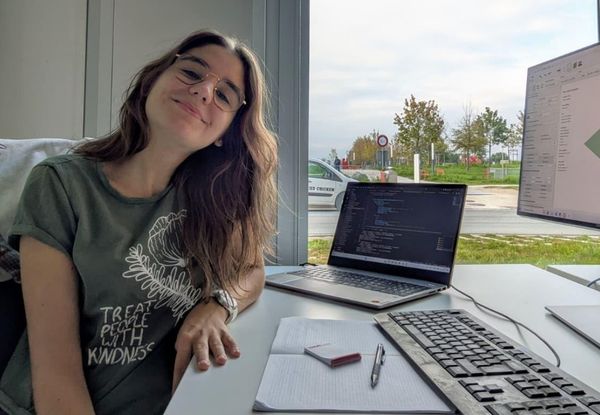
Why did you choose the École Polytechnique Fédérale de Lausanne?
The real stars of my stay in Lausanne were the wind turbines – and, more specifically, the vertical-axis wind turbines! Not the ones you usually see on the horizon along the motorways… Vertical-axis wind turbines rotate perpendicular to the wind, which gives them several unique advantages. (If this is the first time you’ve heard of them, I really do recommend finding out more – they’re fascinating!)
But why wind turbines, you might ask? As someone who is passionate about nature, sustainability has always been one of my core values, and I wanted to give it a more prominent place in my academic and professional life. After all, vertical-axis wind turbines are like spinning wings that harness the wind to generate clean energy. How could you not love them?

What was your research project at the UNFoLD laboratory?
My project at the UNFoLD laboratory at EPFL focused on controlling these blades: the aim was to study and optimise the way in which the wind turbine’s blades adjust their angle in order to maximise energy production (and avoid certain undesirable aerodynamic phenomena, such as dynamic stall) under varying flow conditions.
As a student of Aerospace Systems and Control (MAE), my previous experience has mainly centred on drones and robotics. Moving into flow control – a grey area between control engineering and aerodynamics – initially felt like a leap into the unknown. But sometimes, in life, the best decision is simply to take the plunge. So that’s exactly what I did.
How did your adjustment to this new environment go?
My first few weeks and months at the UNFoLD laboratory were marked by imposter syndrome. Most of the concepts and techniques were new to me, and every day I was learning or putting into practice something different, from cluster-based control to Bayesian optimisation.
Flow control was (and still is) a whole new world to me, but the more I studied and understood it, the more fascinated I became by it.
In my laboratory, there were constant opportunities for discussion, curiosity and learning (and not just during coffee or lunch breaks!). On the first Monday of every month, we held a journal club, where each member presented a scientific article on a different topic.
The laboratory also organised regular research updates, where everyone shared their progress and the challenges they were facing. Each member was working on a fascinating topic: from the aerodynamics of flags and fish to blade profiles. Following their projects closely and understanding their approaches was a constant source of inspiration.
How has this work placement helped you in your career?
Being fully involved in the lab’s activities has given me an insight into what life as a PhD student is really like. Spoiler alert: I loved it.
From an academic perspective, my time at EPFL had a profound impact on me. Not only did I realise that I wanted to go on to do a PhD, but I also discovered a field of research that I am truly passionate about and which I am keen to continue exploring.
I’m still at EPFL today: having completed my Master’s thesis, I’m now working on another exciting project at UNFoLD, this time as a research assistant. What’s next? A PhD at ONERA, starting in January, on active flow control: the perfect next step in this incredible journey that began in Lausanne.
What memories do you have of your time in Lausanne?
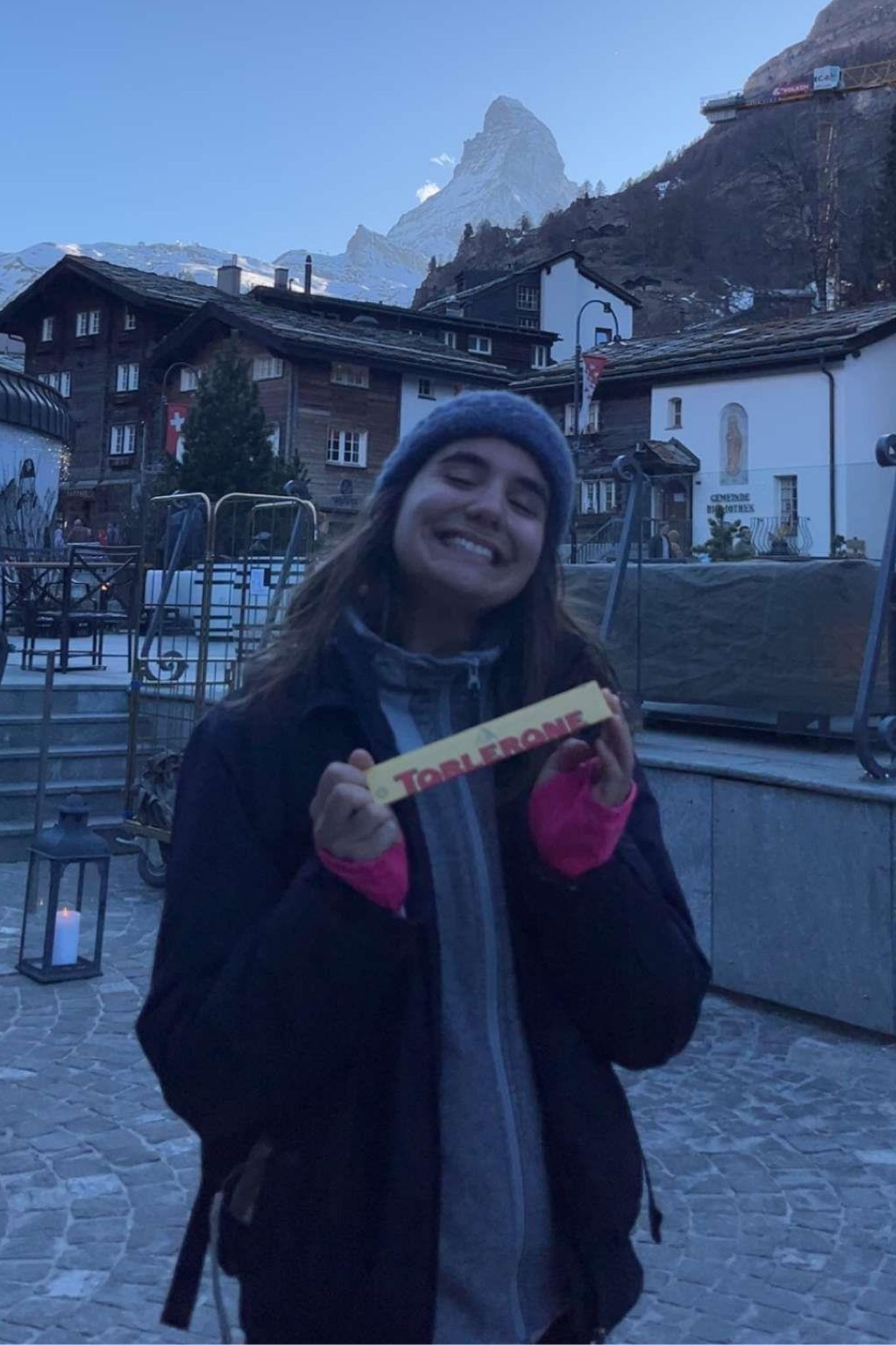
My experience in Lausanne wasn’t limited to wind turbines and control systems… The combination of the mountains, the lake and the long summer days made my stay even more special. Oh, and before I forget: there are also the hills – lots of hills! This city is the ultimate test of your physical stamina, especially if you live in what’s known as Le Mont-sur-Lausanne, as I did.
Every day, I would cycle back and forth between my home and the laboratory, and even though the hills were tough (and I stopped every single time!), I have to admit that the ride along the lake in the morning, or the golden evening light on the water on the way back, made every bit of effort well worth it.
The lake is, without a doubt, my favourite spot in Lausanne. It’s the perfect place for all sorts of activities: running, rollerblading or cycling along the long paths; swimming and cooling off in summer (or in winter, for the more daring among us!); enjoying an aperitif with friends after work; or simply lying back in the gardens by the water’s edge, taking in the beauty of the mountains.
What message would you like to convey to donors?
I would like to express my deepest gratitude to the Foundation’s donors. Your support enables students like me to seize unique opportunities, explore new fields and grow both academically and personally.
Thanks to your generosity, experiences that might otherwise have seemed out of reach are becoming a reality and having a lasting impact on our future careers. Thank you for making this journey possible!