


< back to articles
From Beneficary to Donor: Léo Briand, a Dedicated Volunteer Turned Entrepreneur
Published on
Eight years after our article on the startup that aims to change young people’s perspective on science, we interviewed Léo Briand (S 2018), founder of Vittascience. More than a decade after he first got involved with OSE l’ISAE-SUPAERO, he looks back on his journey, his entrepreneurial adventure, the support he received, and the reasons that led him, in 2025, to become a donor himself.
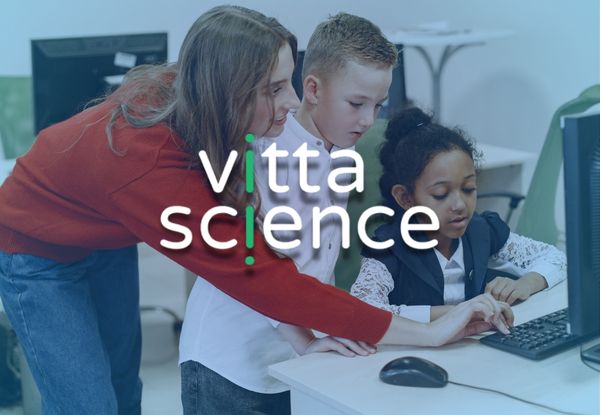
Student Engagement: The Seed of an Entrepreneurial Project
After completing a preparatory class in MPSI at Castres, Léo Briand enrolled at ISAE-SUPAERO in 2014. Starting in his freshman year, he became involved in the institute’s student outreach program, particularly through tutoring and helping young people discover scuba diving.
▬ “That led me to get my diving certification so I could then teach classes as part of the program’s activities.”
At the same time, he continues his work as a classroom tutor for students at Mirail and in schools within the priority education network. This experience has inspired him to take things a step further.
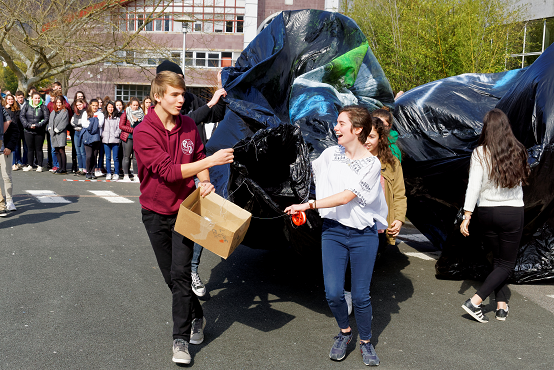
In his sophomore year, as part of his Innovation and Research Project (PIR), Léo chose the entrepreneurial path. His idea: to design educational kits that would allow teachers to introduce students to science in a hands-on and fun way. Together with three classmates, he then developed his first, particularly ambitious product: a hot-air balloon four meters in diameter, equipped with sensors, that students could build and then fly.
▬ “What was great about it was that it had a strong connection to aeronautics. There was something engaging about it—since it’s a fairly large object, but still fun to fly—while also covering the scientific aspects of many disciplines at once.”
This first product thus combines mathematics, physics, life and earth sciences, and technology—an approach that is still evident today in the solutions developed by Vittascience.

Recognition from Early Supporters
Even if the project does not generate economic benefits in its first year, it quickly receives initial support: OSE l’ISAE-SUPAERO covers the cost of purchasing the components needed to build the prototypes. The initiative then received recognition at the Social Cup, a social entrepreneurship competition where the team made it to the podium.
Léo then went on to pursue a dual-degree program, earning a master’s degree in Technological Innovation and Entrepreneurship at École Polytechnique. In addition, in 2016, he received support from the Foundation, which enabled him to continue developing the project while he began marketing it to schools.
▬ “It was truly a gesture of support that meant a lot to me.”
The first kit, called the Solar Balloon Kit, marks the beginning of a range that is gradually expanding. Robotics, meteorology, artificial intelligence, cybersecurity, and even automatic irrigation: over the years, the kits have become more diverse while remaining true to their original goal: to spark young people’s interest in science.
From Vittascience’s Beginnings to Today
While still in school, Léo began marketing his products to elementary, middle, and high schools. Winning the École Polytechnique’s Jean-Louis Girondeau Prize, which recognizes the best entrepreneurial projects, solidified and strengthened his determination to launch the company.
Vittascience was officially launched in March 2018. Léo devoted himself to it full-time, notably by completing his final-year internship at his own company.
The early years, however, were difficult. The company grew gradually, without raising any capital, primarily through the sale of its solutions, supplemented by various awards and grants.
▬ “I couldn’t even pay myself for the first two years.”
Since 2019, the company has received support from the Ministry of National Education through the Edu’Up program, which is dedicated to digital innovations in education.
Vittascience is evolving its model: in addition to its hands-on kits, it is launching a digital platform of the same name, dedicated to computer science.
▬ “We offer both educational kits and software that allows students to explore software development, robotics, and AI.”
As of 2025, Vittascience has 15 employees in France. Its platform is used by approximately 500,000 students each year, and several thousand kits have been sold not only in France but also in Luxembourg, Belgium, and Switzerland: the company is expanding internationally.
Giving Back:
—A Virtuous Cycle of Recognition
After several years of development, and as Vittascience was establishing itself in its field, Léo began to think about how to show his appreciation.
▬ “Since 2023, the company has begun to mature, with a clear path forward. I felt that it was also time to give back. Especially to ISAE-SUPAERO, because they were the first to support me, and the idea came from my involvement with the Student Social Outreach program.”
In 2025, Léo decided to make a donation of 5,000 euros to the ISAE-SUPAERO Foundation, earmarked for OSE l’ISAE-SUPAERO, the birthplace of Vittascience and the source of his calling. For him, this donation is part of a cycle of giving and a virtuous circle: enabling other students to benefit in turn from support at a time when it can make a difference.
▬ “I had this feeling, sort of, that I owed something to someone… It was important for me to do this. Over the past few years, I’d jotted down on a little piece of paper the acts of kindness I felt indebted for and the people I was grateful to.”
He emphasizes, however, that he does not view his donation as a debt. Rather, it is about continuing a cycle from which he himself has benefited: this “give back” mindset to fuel a virtuous cycle.
Léo Briand’s
Advice:
S 2018
What advice would you give to a young student who wants to start a business?
With several years of entrepreneurial experience under his belt, Léo also reflects on the right time to take the plunge. He says:
“First of all, it’s never been easier than it is now to get started. Objectively speaking, from a business setup perspective, it’s very straightforward. And then, with digital tools, you can easily handle administrative, accounting, and communication tasks, among others. Finally, business incubators can provide support in so many areas—I myself have been supported by five of them.”
On the other hand, if you start out as a student, you ultimately have very few contacts and very little experience. I think that’s both the strength and the weakness of these projects.
When you’re young, you’re a little “naive.” That can be a great strength because, sometimes, you’ll take on things that others wouldn’t dare to do. But on the other hand, that naivety can lead you straight into a wall because you don’t have enough experience.
I’d say there are two times in life when it’s really a good time to take the plunge: either right after college, as I did, when you’re a little naive, you don’t know much, but you have the energy; or after age 35, when you’ve started to build up a wealth of professional and personal experiences, you know your field well, and you have a certain degree of financial security.
“And one last thing: perhaps it’s the financial constraints. When you start out at 23, you haven’t bought a house with a mortgage or anything like that. You might have fewer financial obligations in life that hold you back, which means there’s less to lose if it doesn’t work out.”
A story that continues…
From his early lessons with middle and high school students to the Vittascience platform, which is now used by hundreds of thousands of students, Léo Briand has consistently pursued the same goal: to inspire a love of science in young people.
His journey also illustrates ISAE-SUPAERO’s ability to foster the creation of projects, support their development, and sustain this commitment beyond the students’ academic careers. Thank you to Léo Briand and Vittascience, as well as to the other donors, without whom stories like this would not be possible.
Share your story, too!
Have you received support from the ISAE-SUPAERO Foundation and would like to share how that support has made a difference in your journey? Are you a donor who would like to share your story?
Your story can help inspire other alumni to get involved in mentoring.